
What is Answer Engine Optimization (AEO)?
AEO is the practice of optimizing your content so AI assistants and search engines can directly cite your website in conversational answers.
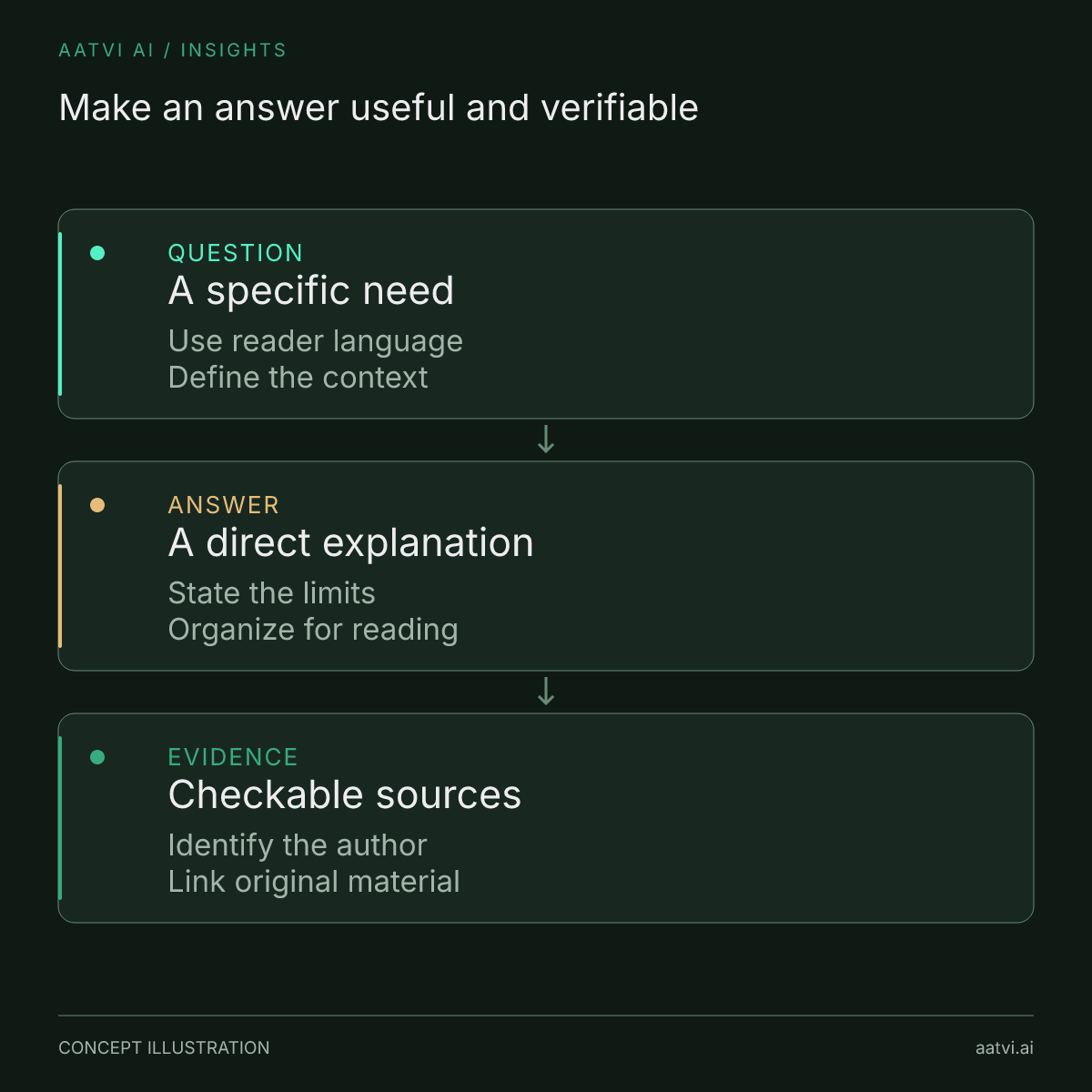
Answer Engine Optimization (AEO) is the practice of structuring your content so that AI-powered search engines and conversational assistants can directly cite your website when answering user questions. Unlike traditional SEO, which focuses on ranking in a list of links, AEO focuses on being the source that AI models reference in their responses.
A concrete example of a reader-focused format is the AI-generated code audit checklist: it answers a specific pre-launch review question.
As enterprise buyers increasingly use AI assistants to research software solutions, AEO becomes critical for B2B visibility. When a CFO asks their AI assistant "What ERP systems use AI for anomaly detection?", you want your platform mentioned in the answer — with a citation link back to your site.
For an example of explaining unfamiliar terminology, see what AI slop means in software development.
The key principles of AEO include structured data markup (JSON-LD schemas), question-based headings that match how people ask AI assistants, citation-friendly content blocks of 40-60 words, and AI-crawler-friendly robots.txt policies that explicitly allow GPTBot, ClaudeBot, and PerplexityBot to index your content.
For enterprise software companies, AEO also means providing machine-readable product information through files like llms.txt — a standardized format that helps AI models understand what your company does, what products you offer, and how to accurately describe your capabilities to users.
The consulting-versus-development guide addresses a different reader need: deciding which kind of help to seek. These examples illustrate content formats, not evidence of search rankings.
Companies that invest in AEO now will be ahead when AI-driven discovery becomes the default way enterprise buyers evaluate software. Traditional SEO still matters, but AEO makes sure you show up in the conversational interfaces where more purchase decisions are starting.